The TL;DR
The Mess
Identifying the Problem Space
Context
Between 2017-2018, research indicated that 30-50% of parents in the UK were not reading to their children, while 10% of adults faced literacy challenges like dyslexia.
Friction
Traditional books were struggling to compete with high-stimulation digital devices.
Parents viewed technology as a 'babysitter' rather than a tool for shared development.
Goal
Design a user-centered children's storybook that supports literacy and language development by blending the tactile joy of physical books with the engagement of digital interactivity.
The Direction
Strategic Planning & Constraints
My strategy was to move beyond the 'gimmick' of AR and create an immersive narrative experience. The goal was to support language development by blending tactile storybooks with a companion app that provided audio narration and 2D interactivity.
Operating under a tight 9-month lifecycle, required me to lead cross-disciplinary work across physical print formats (soft-cover, hardback, lay-flat) and technical AR development using Unity 3D and Vuforia to ensure lean, high-performance execution.
| Constraint | Strategy |
|---|---|
| Dual Audience | Managed distinct needs for 'Primary Users' (Children ages 7-9) and 'Secondary Users' (Parents/Purchasers) through segmented personas. |
| Technical Complexity | Selected Vuforia and Unity 3D for the AR engine to ensure agnostic development and high-accuracy image recognition without the need for intrusive QR codes. |
| Co-Creation Scope | Orchestrated a 6-week storytelling workshop series with 300+ primary school students to ensure the narrative was 'by children, for children'. |
The Methods
Frameworks & Human Activity Systems
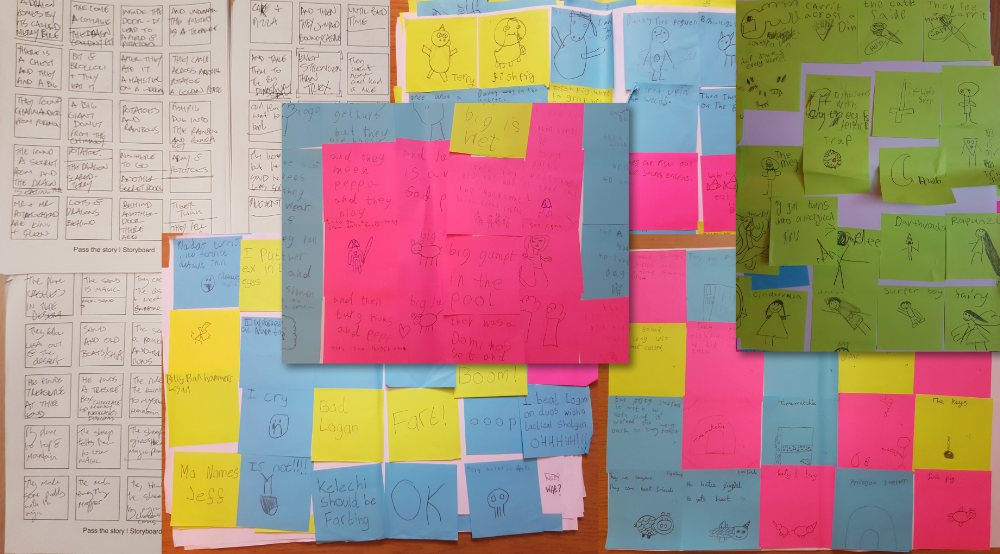
Mass Co-Creation
Facilitated 6 weeks of storytelling workshops with 300+ primary school students to ensure the ideas and plot were 'by children, for children'.
Strategic Research
Conducted an online survey of 80+ respondents and 20+ qualitative interviews with teachers and parents to map technology usage and reading behaviors.
Experience Mapping
Developed detailed Experience Journey Maps to identify friction points in app onboarding and reading transitions.
Narrative Scaffolding
Mapped the co-created stories to Joseph Campbell's 'Hero's Journey' to ensure a high-quality, professional story arc.
The Insights
The "Aha!" Moments of Discovery
Visual Trust Indicators
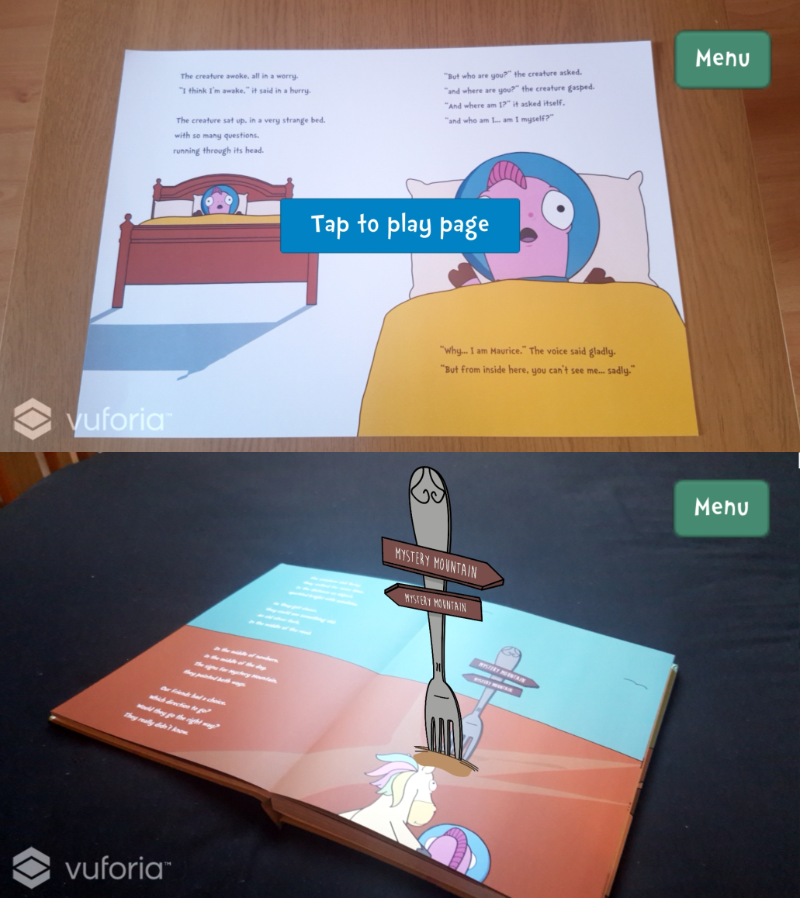
Research revealed that parents were hesitant to use AR if it felt intrusive. To reduce 'intrusion', the book was designed with no 'AR visual indicators' on any page, with the illustrations themselves acting as the 'image-target' for the AR app.
The Agency Gap
During workshops, we found that children's engagement spiked when they felt they influenced the world. This led to the pivot from static visuals to interactive 2D pop-ups and on-demand audio narration.
Narrative Complexity
While the reading level was aimed at age 7+, the insight was that the AR narration allowed younger children to enjoy complex themes of identity and morality that they otherwise couldn't access alone.
The Change
Impacting Together
The final product was a seamless ecosystem: a physical book that functions independently, paired with an AR app that adds a sensory layer to the narrative.
Commercial Validation
Sold 40+ books during the initial launch nights. Over 100 books sold in total.
Educational Impact
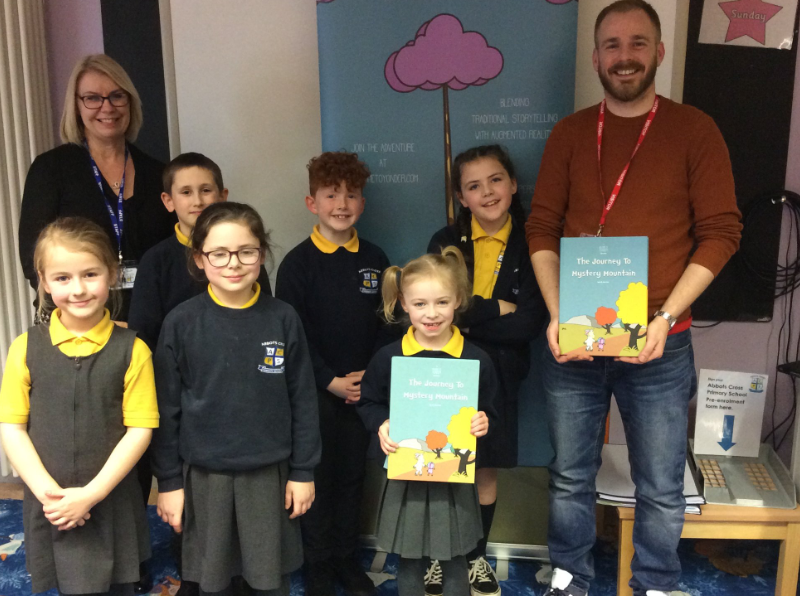
Abbots Cross Primary School integrated the book into their library, citing the "fantastic" feedback from students who saw their own ideas realised in the final characters. Read their news post about the book launch.
System Scalability
I designed the AR features to be modular, facilitating the expansion into future books and non-book 'plane detection' content for off-page play.
The Learning
Project Retrospective
Iterative Refinement
Post-launch feedback indicated the reading level was slightly high for the youngest users. My takeaway was the need for 'Dynamic Reading Levels' - an AR feature that could toggle text complexity based on the child's age.
Leadership Growth
Managing this project taught me how to lead a product through a full lifecycle, from raw qualitative research with 300 participants to a physical manufacturing run and digital deployment. It reinforced that the most impactful 'Lead' designers are those who can synthesize technical constraints with deep human empathy.
Fancy a chat?
I'm always interested in new creative projects and collaborations. Let's make something together.