The TL;DR
The Mess
Identifying the Problem Space
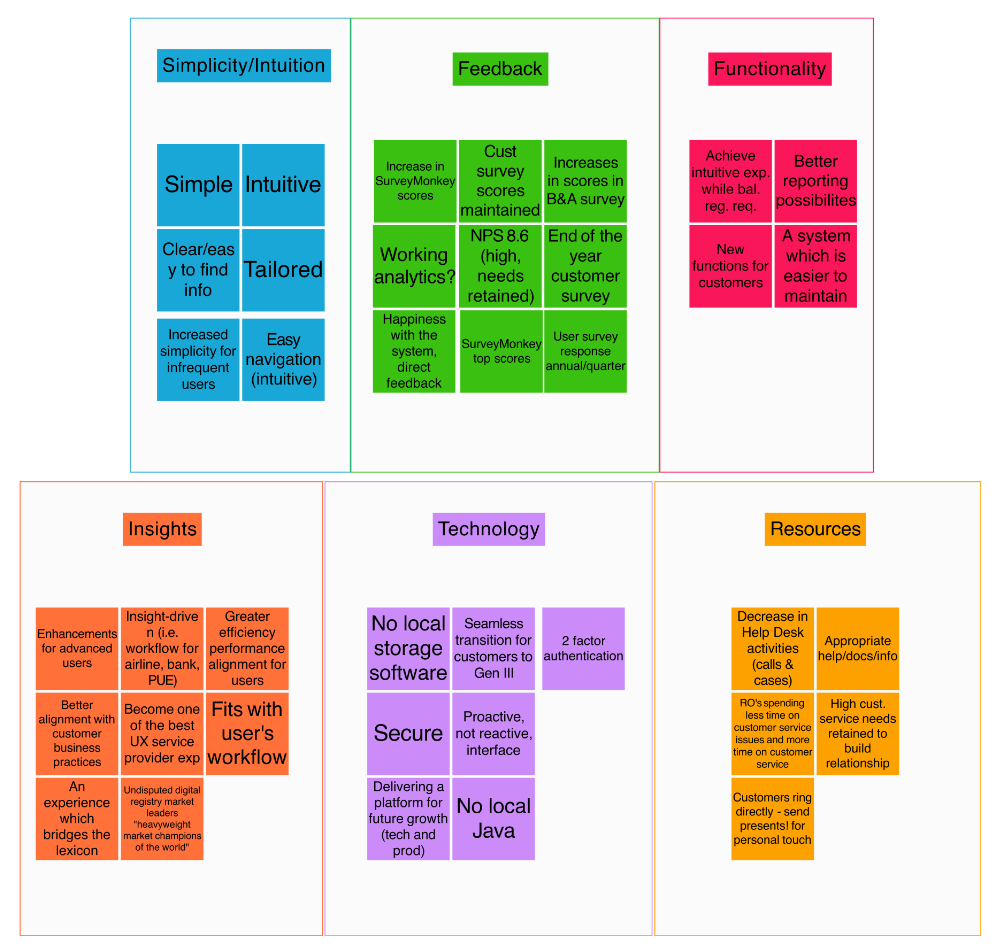
Legacy Systems The existing system was a high-friction environment where users were met critical barriers in wayfaring, form logic, and interaction patterns.
The Core Issue The legacy environment was a 'non-linear journey' that hindered users' ability to complete high-stakes aviation registrations and searches efficiently; occurring in legal workflows where ambiguous labeling could lead to significant operational risk.
The Stakeholders The internal support team was drowning in high call volumes, indicating gaps in system documentation and process logic.
The Direction
Strategic Planning & Constraints
Operating under a tight 3-month lifecycle, required me to lead cross-disciplinary work to move from a 'monolithic' system to a modular, micro-service-led architecture validated by real-world data. The objective was to design a user-validated next-generation prototype that met rigorous business goals while remaining strictly user-centric.
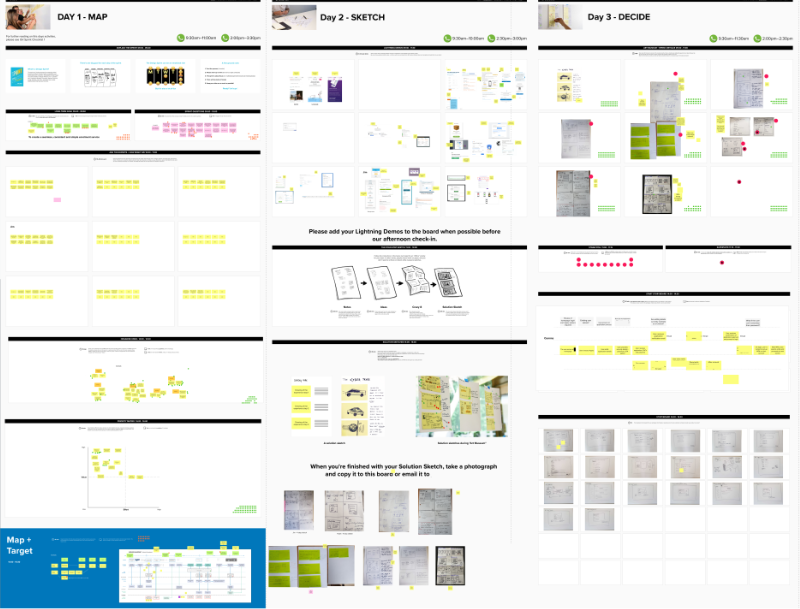
I implemented a Lean UX strategy using Design Sprint 2.0 methodology to decouple the redesign into manageable micro-services. The roadmap was divided into 11 sprints, focusing on sitewide restructuring first, followed by use-case-specific modules like Access, Searches, and Registrations.
| Constraint | Strategy |
|---|---|
| Global User Variance: Disparate needs between frequent legal admins and infrequent guest users. | Persona-Driven Architecture: Identified 4 distinct persona types to balance expert 'power-user' speed with novice 'guest' guidance. |
| Technical Complexity: High-stakes aviation registrations involving complex 'multi-object' data. | Design Sprint 2.0: Decoupled the redesign into 11 use-case-specific sprints to iterate on individual components without stalling the roadmap. |
| Service Fragility: Transitioning to cloud during a global pandemic (COVID-19). | Service Blueprinting: Pivoted to collaborative remote workshops and lean service blueprints to align technology usage with support behaviors. |
The Methods
Practical frameworks for Human Activity Systems
Systems Thinking vs. Double Diamond Rather than a linear process, we utilised a Lean UX/Design Sprint methodology to enable parallel tracks of ideation, prototyping, and testing.
Information Architecture Conducted Card Sorting to normalise system language and identify natural grouping for complex legal terminology.
Contextual Auditing Performed thematic analysis of support team interactions to map internal system requirements against user-facing pain points.
Rapid Prototyping Used Figma to build and test high-fidelity micro-services weekly, ensuring no design was moved to dev without validation from 4-6 users. This also allowed us to conduct usability & prototype testing were rigid security constraints normally prevented screen-based testing.
The Insights
The "Aha!" Moments of Discovery
The Labeling Criticality User testing proved that button placement and labeling were not aesthetic choices but risk-mitigation factors in legal workflows.
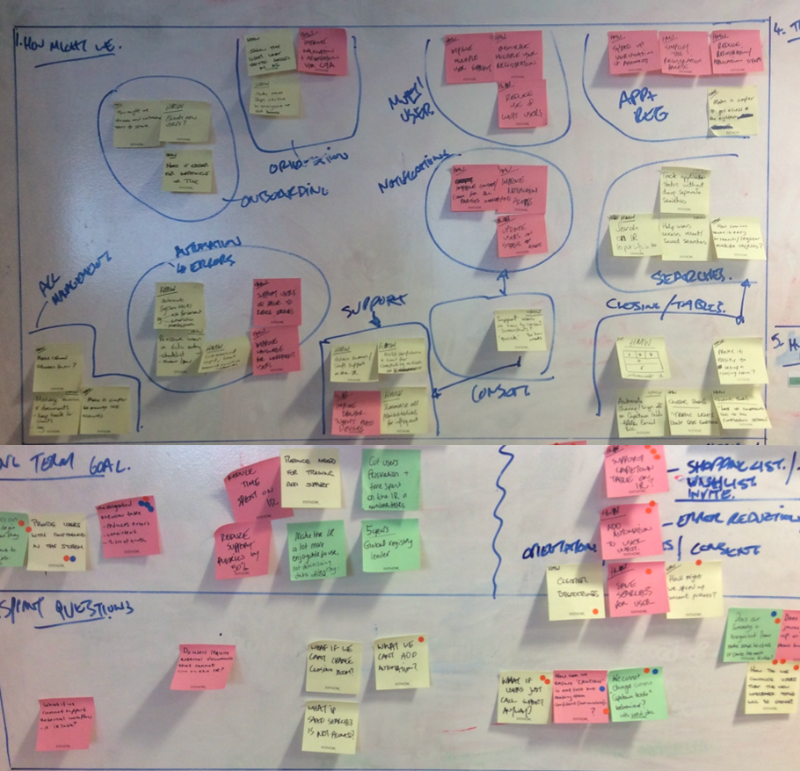
Process Over Pages The "Aha!" moment came from identifying that the friction was in the non-linear flow, not individual screens; we solved this by mapping the 'Problem Space' before any interface was designed.
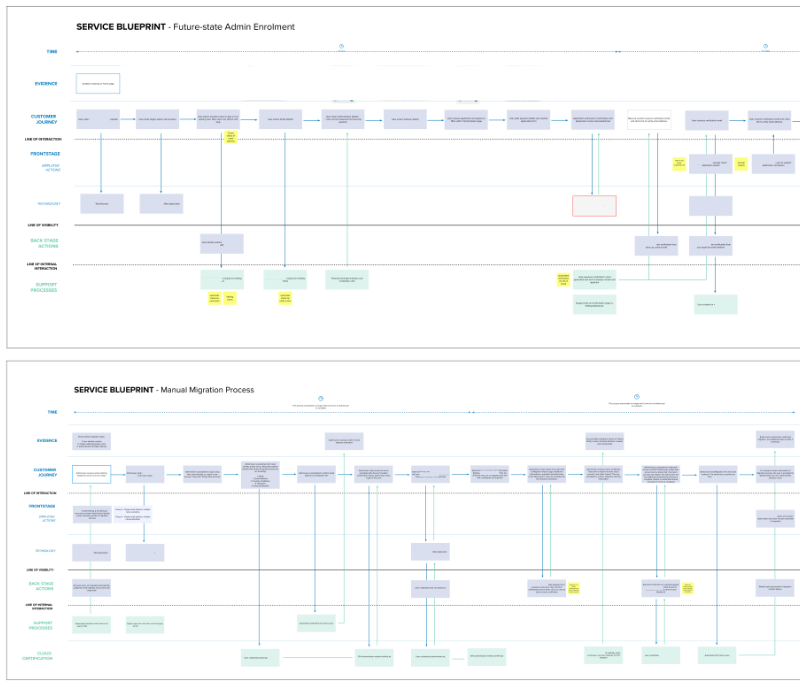
Institutional Intelligence The internal support team's daily behaviors were the missing link in the service blueprint - we mapped their process to ensure the new UI didn't break existing back-end efficiencies.
The Change
Impacting Together
The co-design (communication, collaboration and decision-making) process was a key enabler of the success of this project. It allowed us to align the needs of the business, users and developers - supporting a quick, efficient and iterative design & validation cycle.
Validated Enterprise Ecosystem Delivered a fully tested, end-to-end prototype for core functionalities (Access, Searches, Registration).
Scalable Design Language Architected a Design Pattern Library (Typography, Grid Systems, Interaction Specs) to standardize UI across the platform.
Service Evolution Created Lean Service Blueprints that facilitated a seamless cloud migration and redefined the account management process.
Metrics of Success Transitioned from an unknown 'Vision State' to a user-validated Product Roadmap with 100% stakeholder buy-in for the sprint delivery model.
The Learning
Project Retrospective
Velocity as a Feedback Loop This project proved that iterative testing with 4-6 users weekly is the 'sweet spot' for maintaining momentum in enterprise environments.
The Service Design Mindset I learned that true product leadership requires looking beyond the screen. By mapping the offline support resources and cloud-migration workflows, we ensured the system was resilient to external shocks like the COVID-19 pandemic.
Growth This project matured my ability to facilitate collaborative mapping with cross-functional product and dev teams, moving the needle from 'designing features' to 'architecting services'.
Fancy a chat?
I'm always interested in new creative projects and collaborations. Let's make something together.